Smart Water Shutoff Valves and Leak Detectors: 2026 Fit Guide
Quick answer
Choose alert-only or automatic shutoff first. Then verify the exact pipe or meter fit, installation boundary, power, connectivity, outage behavior, fees, warranty, and fire-sprinkler implications before buying.
Common questions
- Is a smart water shutoff valve better than a leak detector?
- They solve different problems. A point leak detector identifies moisture where it is placed, while an automatic shutoff can stop water downstream of the installed valve. Many homes benefit from both, but no system detects every possible leak.
- Will a smart water shutoff work during an internet or power outage?
- It depends on the exact system. Some retain limited local or device-to-device shutoff during an internet outage, while powered inline devices may need a battery backup to operate during a power failure. Verify the current manual and test the installed configuration.
- Do leak detection devices earn the WaterSense label?
- No. EPA says leak detection and flow monitoring devices are not eligible for the WaterSense label. EPA suggests checking whether an applicable product is certified to ANSI/CAN/IAPMO Z1349 instead.
Source note: Checked October 19, 2026 using EPA WaterSense guidance and current official manufacturer product, support, compatibility, fee, and warranty pages. This is desk research, not hands-on product testing; specifications, availability, integrations, and terms can change.
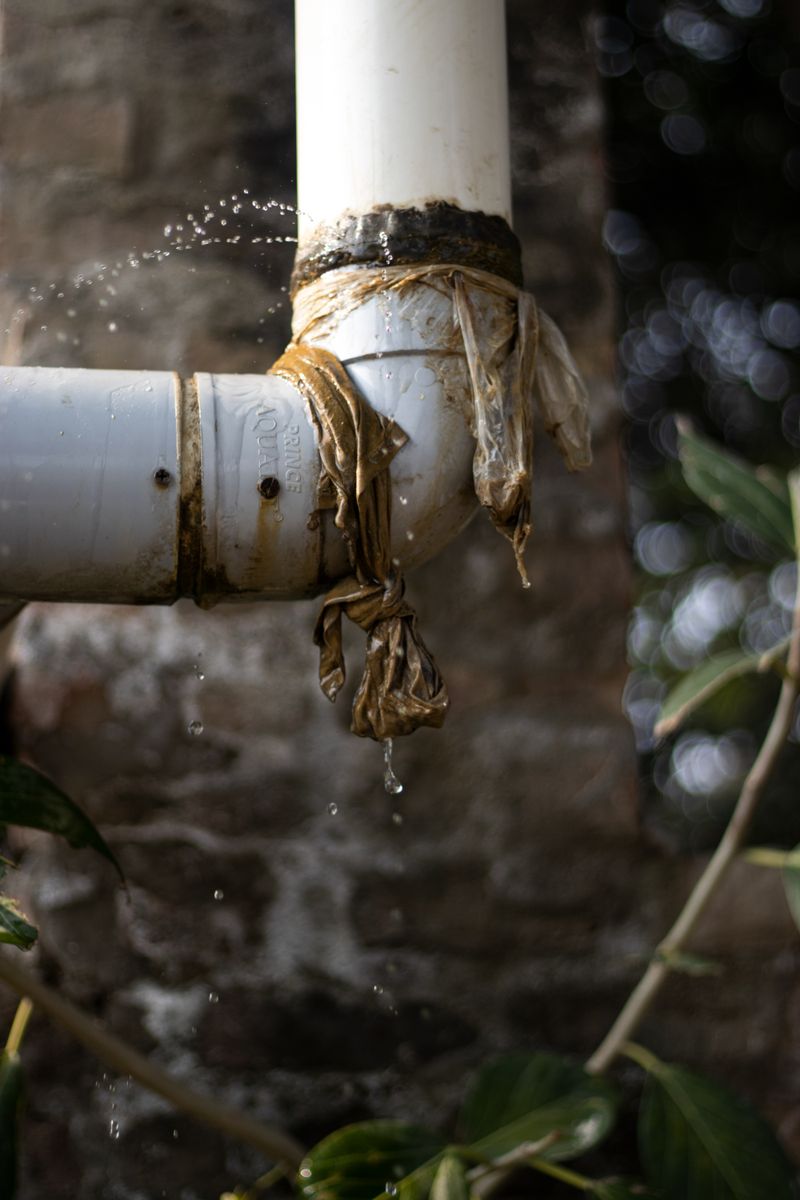
A smart water leak detector can sound an alarm or send an alert. A smart water shutoff valve can also stop water downstream of the installed valve. Start with that distinction, then verify the exact service boundary, pipe or meter fit, power and internet dependencies, outage behavior, maintenance, and current terms.
There is no universal winner. A renter who cannot touch a utility meter needs a different solution than a landlord protecting an empty property or a homeowner planning an inline valve with a plumber. Use this guide to narrow the category and prepare fit questions—not as a substitute for the current manual or a site assessment.
How this guide was researched
Methodology: Flow Control HQ reviewed the EPA WaterSense February 2026 selection guide and current official manufacturer product, installation, compatibility, integration, fee, and warranty pages. We did not hands-on test these products, simulate leaks, or score them. No product is a universal winner, and commercial placement did not determine inclusion.
EPA recommends comparing monitoring goals, alert type, automatic or remote shutoff, pipe size, programmability, power, installation, fire-sprinkler impact, and maintenance. It also says these devices do not earn the WaterSense label. Where relevant, buyers can look for certification to ANSI/CAN/IAPMO Z1349, which tests available functions such as alarms and automatic shutoff.
Choose the category first
| Category | What it detects | Shutoff behavior | Typical fit | Main limitation |
|---|---|---|---|---|
| Point moisture sensor | Water touching probes or a sensing cable | Usually alert-only; some can trigger a compatible valve | Under sinks, at a water heater, behind a washer, near condensate or a sump | Only detects water that reaches the sensor |
| Meter-mounted monitor | Whole-property flow inferred at a compatible utility meter | No built-in valve; a supported integration may add shutoff | Homes where pipe cutting is undesirable and the utility permits installation | Meter compatibility, utility access rules, Wi-Fi/cloud path |
| Inline flow monitor and shutoff | Flow, pressure, temperature, or usage patterns after the installation point | Built-in remote and/or automatic whole-line shutoff | Individually plumbed homes with an accessible main and professional installation | Higher installed cost; power, pipe layout, and false alerts need planning |
| Motorized valve operator plus sensors or monitor | Moisture at paired sensors or flow alerts from another system | Turns a compatible existing ball valve, or controls a separate inline valve | Modular coverage and locations where a sound ball valve already exists | Existing valve condition, exact pairing, hub, and local-operation rules |
Alert-only can be enough when someone can respond quickly and the risk locations are known. Automatic shutoff deserves closer consideration for an unoccupied home, a high-damage location, or a property where a responder may be hours away. Either way, learn how to shut off water in an emergency before relying on automation.
Current product fit matrix
The examples below were checked on October 19, 2026. “Current” means the official page was available on that date; it does not guarantee inventory at checkout.
| Exact product | Category and detection method | Shutoff | Installation boundary and fit | Power and connectivity | Point-sensor support and local behavior |
|---|---|---|---|---|---|
| Moen Flo Smart Water Monitor and Shutoff (900-001 3/4 in., 900-006 1 in., 900-002 1-1/4 in.) | Inline point-of-entry flow, pressure, and temperature monitoring | Built-in remote and automatic shutoff | Accessible cold main after the meter, manual shutoff, and PRV where applicable; choose the exact line-size model and fittings | Continuous power and 2.4 GHz Wi-Fi; Moen says catastrophic-leak shutoff may still operate while internet is offline, but alerts, data, and remote control do not | Compatible Moen leak detectors can trigger shutoff. Optional battery backup is separate; verify the installed model and test both offline and backup behavior |
| Phyn Protect (formerly Phyn Plus) | Inline ultrasonic flow and pressure-wave monitoring | Built-in remote and automatic shutoff after its learning period | Main line no larger than 1-1/4 in.; device has 1 in. NPSM ends and may need adapters; plumber recommended | Power outlet within 12 ft and Wi-Fi required; if power is lost, Phyn says the valve stays in its prior state and will not newly auto-close | Phyn’s product page centers on whole-home sensing. Use separate point sensors where drains, condensate, or low-flow releases may not be captured promptly |
| Flume 2 Smart Home Water Monitor | External magnetic meter monitor; no pipe cutting | No built-in valve. Supported YoLink valves can be configured to close for selected Flume alert rules | Straps to a compatible utility meter; not for a pipe or a well. Confirm the exact meter and obtain utility permission before opening a meter box | Battery sensor sends RF to a powered bridge, which uses Wi-Fi and Flume’s cloud | The Flume–YoLink integration requires a YoLink Hub. Treat it as an integrated shutoff path, not a feature inside Flume 2 |
| YoLink Valve Controller 2 (YS5003) + Bulldog Valve Robot (BDOG) + Water Leak Sensor 2 (YS7904) | Rope-style point sensor paired to a motorized operator on an existing ball valve | Integrated automatic shutoff when correctly paired | Bulldog mounts on an accessible, freely moving 1/2, 3/4, or 1 in. ball valve; not a gate valve. An insurer may require an inline motorized valve instead | Controller uses four AA batteries and/or 12 V adapter; sensor uses two AAA batteries; hub/internet required for full app functions | YoLink documents Control-D2D pairing that can close the valve without internet when paired devices remain powered and in range. Test the exact pairing; D2D is not a substitute for hub health alerts |
| GoveeLife Water Leak Detector 1s (H5044 gateway + H5059 sensor) | Point sensor with top drip and bottom flood probes | Alert-only; no documented shutoff in this kit | Place where leaked water will reach it; H5059 sensors require the H5044 gateway for app functions | Sensor uses two AAA batteries; gateway uses 2.4 GHz Wi-Fi; sensor has a local adjustable alarm | Current official kit lists app/email alerts and a 105 dB local alarm. It does not monitor pipe flow or stop water |
Fees, warranty, certification, and the last check before buying
| Product | Fee boundary checked October 19, 2026 | Warranty stated by manufacturer | Certification disclosed in reviewed official material | Verify before purchase |
|---|---|---|---|---|
| Moen Flo | Core device services are available without the optional paid FloProtect plan; FloProtect terms describe paid benefits including an extended warranty | 1-year limited; FloProtect can extend coverage to 5 years while eligibility and subscription conditions are maintained | Moen specification sheets list NSF 61/9 and 372 plus IAPMO IGC-349-2017; this is not a WaterSense label | Exact model, adapters, outlet, Wi-Fi, battery backup, current FloProtect price/terms, and any insurer requirements |
| Phyn Protect | Official product page describes a free Phyn app; recheck current service terms at checkout | 2-year limited | Phyn states NSF/ANSI 61 and 372 certification | Exact adapters and straight-pipe space, current terms, Wi-Fi strength, power-loss plan, and whether branches sit upstream of the device |
| Flume 2 | Flume says direct purchases have no monthly fee for core features; partner-program fees and features can differ | 1-year limited for the standard direct-purchase product | No potable-water-contact certification was documented for the external sensor in the reviewed sources | Meter make/model, utility permission, bridge signal, current purchase channel terms, and supported YoLink hardware if adding shutoff |
| YoLink YS5003 + BDOG + YS7904 | Official product pages did not disclose a required recurring fee; a hub and selected hardware are additional purchases | 2 years for Controller 2 and 1 year for the Bulldog operator; Water Leak Sensor 2 lists 2 years | Operator does not contact potable water; certification differs if selecting a separate inline valve | Valve type/condition, operator bracket fit, hub, D2D-compatible devices, battery plan, and written insurer acceptance |
| GoveeLife H5044 + H5059 | Official product page did not disclose a required subscription; gateway is required for connected alerts | 1-year limited | No applicable plumbing certification was documented; sensor does not contact potable water | Exact gateway/sensor bundle, alert recipients, alarm placement, Wi-Fi, batteries, and current app terms |
Terms change. Save the exact product page, manual, warranty, and subscription terms with your purchase record rather than relying on a comparison article months later.
Product-specific decision notes
Moen Flo: inline monitoring with a built-in valve
Moen’s current Flo product information describes whole-home flow, pressure, and temperature monitoring plus remote valve control. Official specification sheets show three line-size models and a one-year limited warranty. FloProtect is optional, but its current terms matter if you are counting on the extended warranty or other paid benefits.
This is a cut-in plumbing project, not a generic add-on. Ask the installer to identify the exact model, adapters, service direction, manual override, power source, battery-backup scope, and every branch that will remain upstream. Review likely labor and electrical scope in our automatic water shutoff valve installation cost guide.
Phyn Protect: the current name for Phyn Plus
Phyn Plus is now Phyn Protect. The current Phyn Protect product page confirms ultrasonic flow sensing, a built-in valve, 1-inch NPSM ends, installation on mains no larger than 1-1/4 inches, Wi-Fi, and nearby power. Phyn recommends a licensed plumber.
Power-loss behavior deserves special attention: Phyn says the valve remains in its previous state and will not newly auto-close without power. The manual override remains important. For a property where outages accompany freezes or storms, include backup power and post-outage testing in the decision rather than assuming “automatic” means independent of electricity.
Flume 2: alert-only by itself, integrated shutoff with YoLink
Flume 2 straps to a compatible utility meter and reads its magnetic field. It needs a compatible meter, a powered Wi-Fi bridge, cloud communication, and permission to access the meter enclosure. Flume says it does not work on a pipe or a well; check the current meter compatibility list before buying.
Standalone Flume 2 contains no valve. However, Flume now supports YoLink shutoff valves. In the integration, users choose which Flume usage-alert rules may close the valve. A YoLink Hub is required, and reopening may follow different app behavior than closing, so verify the current workflow during commissioning.
YoLink: modular point-sensor shutoff
The current Valve Controller 2 and Bulldog page identifies controller model YS5003, battery or adapter power, and a bolt-on operator for a functioning ball valve. Pairing a compatible leak sensor through Control-D2D provides a documented local shutoff path when internet service is unavailable, provided the devices are powered, paired, and within radio range.
The existing valve is part of the system. A stiff, corroded, undersized, inaccessible, or gate-style valve is not a sound base for a bolt-on operator. Have a plumber decide whether the better scope is valve replacement plus an operator or a listed inline motorized valve.
GoveeLife: distributed point alerts
The current GoveeLife Water Leak Detector 1s listing names the H5044 gateway and H5059 sensor. It is an alert-only system with a local alarm and connected notifications, useful where water is likely to reach the sensor quickly.
Point sensors can also cover water that flow monitors may not identify, including a leaking drain, condensate overflow, or water entering from outdoors. Place each sensor at the lowest likely water path, name it clearly in the app, and confirm that the local alarm can be heard.
First Alert L1 and L5: verify availability before planning around them
First Alert’s official pages still document the L1 WiFi Water Leak and Freeze Detector pairing with the L5 WiFi Water Leak Shutoff Valve. The L5 manual says paired L1 sensors can initiate automatic shutoff, while the valve also has a maintenance cycle.
However, the official U.S. store showed the L1 and L5 as unavailable or backordered when checked October 19, 2026. They are not treated here as readily available picks. If you find stock elsewhere, confirm the exact SKU, app support, warranty, sensor-to-valve pairing, and return policy with First Alert before purchase.
Pre-purchase checklist
Use this list with the manufacturer and every installer bidding the work:
- Goal: alert-only, remote shutoff, or automatic shutoff?
- Occupancy: who can respond, and how long might the property be empty?
- Risk map: water heater, laundry, dishwasher, refrigerator, toilets, sinks, sump, treatment equipment, condensate, and lowest finished level.
- Boundary: municipal service or well; dedicated or shared meter; indoor, irrigation, treatment, and outbuilding branches.
- Pipe or meter fit: exact meter make/model or pipe size, material, direction, adapters, straight-pipe clearance, access, and working manual shutoff.
- Power: outlet location, GFCI requirement, cable routing, licensed electrical work, and battery-backup duration.
- Connectivity: Wi-Fi band and signal, hub, cloud path, alert recipients, and what remains functional without internet.
- Safety: fire-sprinkler branch, backflow equipment, electrical exposure, shared service, and any required bypass.
- Authority: utility permission at the meter plus plumbing, electrical, permit, and inspection requirements from the local authority having jurisdiction.
- Controls: sensitivity, learning period, irrigation schedules, guest or vacation mode, manual override, and reopen procedure.
- Maintenance: sensor placement, cleaning, batteries, valve exercise, calibration, firmware, outage recovery, and scheduled tests.
- Terms: current stock, exact SKU, required hardware, recurring fees, warranty, certification, support life, and return policy.
- Insurance: written insurer eligibility, installation, certification, documentation, and monitoring requirements—never assume a discount.
Limits, false alarms, and safety boundaries
No device prevents every loss. A point sensor can miss water that flows away from it. A whole-home monitor can misclassify long irrigation, filling, guests, or a running fixture, and it may not locate the leak. Systems can also miss drain, roof, groundwater, condensate, or upstream service leaks because those events do not create the expected flow signature after the monitoring point.
False positives matter when automatic shutoff interrupts occupants, boilers, treatment equipment, irrigation, or other essential uses. False negatives matter because an alerting system can create misplaced confidence. Commission the system with a plumber, test alerts and shutoff under controlled conditions, and revisit settings after occupancy or seasonal water-use changes.
Never place a device where it could disable required fire suppression. Have a qualified fire-protection contractor confirm the branch boundary. Let the utility govern meter access, an electrician handle compliant power work, the plumbing authority govern permits, and the insurer state its requirements in writing.
Automation also does not replace a safe manual response. Keep the manual shutoff accessible, label it, and use the water leak shutoff triage decision tree when water is actively escaping. For cold-weather risks, pair detection with pipe burst prevention and winterization.
Your next action
Before buying anything:
- Photograph the water-entry area, meter label, manual shutoff, nearby outlet, and available pipe length.
- Map the indoor, irrigation, well, treatment, outbuilding, shared-service, and fire-sprinkler branches.
- Choose alert-only or automatic shutoff based on occupancy and response time.
- Verify the exact SKU, compatibility, local/outage behavior, current fees, warranty, certification, and availability with the manufacturer.
- Request comparable itemized scopes showing device, fittings, valve work, power, permits, commissioning, testing, documentation, and exclusions.
If you are still diagnosing whether water is being lost, start with the hidden-leak and high-water-bill guide. If you already know you want an inline system, compare the full installed scope—not just the hardware price.
Bottom line
Choose the protection category before the brand. Point sensors provide targeted alerts; meter monitors provide whole-property flow insight; inline systems combine monitoring with a built-in valve; and motorized operators can connect compatible sensors or monitors to an existing shutoff.
The right fit is the system whose exact boundary, compatibility, outage behavior, and maintenance plan you have verified in writing. Keep manual shutoff knowledge as the fallback, test the installed system regularly, and never treat a smart device as a guarantee against water damage.

Flow Control HQ Editorial Team
Independent trade-focused editorial team