Kitchen faucet buying guide: fit first, then features
Quick answer
Choose a kitchen faucet by sink geometry and installation constraints first. The right model is the one that fits the deck, reaches the basin correctly, and can be serviced without tearing out the kitchen.
Common questions
- What matters most when buying a kitchen faucet?
- Deck and hole compatibility, spout reach, clearance for hose and supplies, and documented parts/service support matter more than style or trend claims.
- Do kitchen faucets have WaterSense labels?
- Kitchen faucets are usually not in WaterSense eligible categories, so use certified flow and potable-water documentation instead of WaterSense assumptions.
Source note: Model samples and dimensions reviewed 2026-08-31 using current manufacturer spec pages and installation documents. Prices are excluded because model pricing changes frequently.
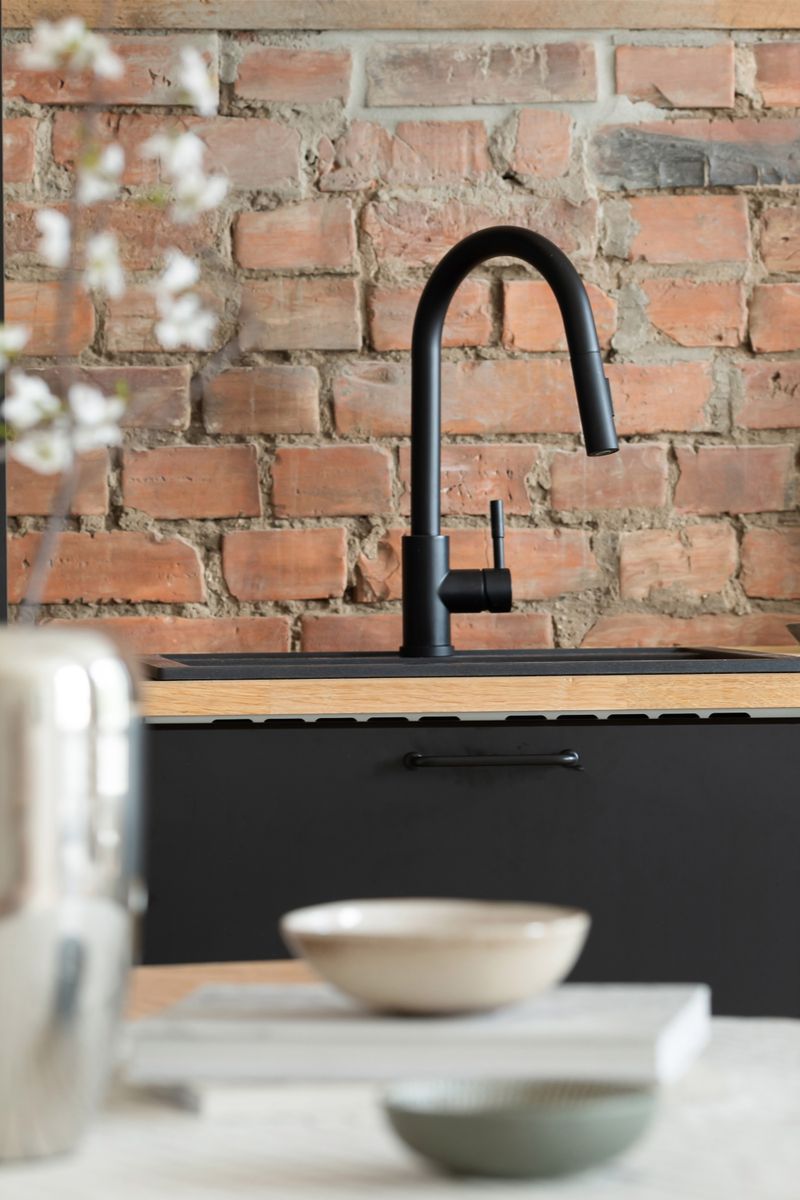
If your home improvement purchase feels endless, it is usually because you evaluated finish and brand first and fit later. In kitchens, fit is the first decision: deck layout, reach, and service access determine whether a faucet performs or becomes a daily nuisance.
This page is focused on one decision: which faucet physically fits your sink and installation reality.
Its intent is different from style-heavy buying lists. You can still compare style after your shortlist passes this fit check.
Why this guide exists
Many pages treat kitchen faucets as “best overall” rankings. This one uses a different method:
- Fit check: does it install correctly in your sink and cabinetry?
- Measured comparison: do the dimensions match your workspace?
- Support check: can you service it with available parts and instructions?
- Certification check: is the faucet and its components documented for drinking-water use?
If a model fails any one of these, it is not your final candidate.
1) Run the fit audit before opening shopping sites
Step 1: Measure deck geometry
For every model you consider, verify:
- Hole count (1, 2, 3, or 4).
- Hole spacing and centerline alignment.
- Hole diameter and deck thickness.
- Whether the body needs a deck plate for your hole count.
A mismatch here creates hidden costs: drilling new holes, replacing a sink, or returning a box.
Step 2: Measure sink working geometry
Measure basin geometry against the faucet path:
- Depth from front lip to back wall.
- Distance from drain location to expected water impact point.
- Window, backsplash, or tall backsplash clearance above spray travel.
Use a strip of masking tape along the intended pull and spray path to identify likely splash lines before you buy.
Step 3: Verify under-sink workspace
Record everything behind the basin:
- Shutoff valve position and condition.
- Disposal, RO hardware, and filters.
- Cabinet shelf and minimum hose turning radius.
If you cannot reach a cartridge, hose, or shutoff valve after installation, the model is a poor match.
Step 4: Confirm certification and replaceability
- Confirm potable-water contact documentation (for example NSF and EPA lead-safe guidance).
- Confirm whether the model has current service parts and a published parts diagram.
- Confirm supply connection type and minimum operating compatibility with your shutoff lines.
If a brand page says “lifetime warranty” but you cannot identify a parts catalog, treat that as incomplete evidence.
Source-based checks used in this guide
The claims in this page are tied to primary documents:
- NSF faucet and plumbing resource: https://www.nsf.org/consumer-resources/faucets-plumbing
- EPA lead-safe product guidance: https://www.epa.gov/system/files/documents/2024-06/how-to-id-lead-free-certified-drinking-water-products-epa_june-2024.pdf
- EPA WaterSense category index: https://www.epa.gov/watersense/watersense-products
- DOE water-efficiency context for fixtures: https://www.energy.gov/cmei/femp/best-management-practice-7-faucets-and-showerheads
Current model comparison method (not a ranking)
Model examples below are included only as fit references.
Method: check each model’s official page on 2026-08-31, then compare the listed physical dimensions and certification notes only.
| Model | Fit-relevant spec (current at time of review) | Where this helps |
|---|---|---|
| Kraus KPF-2620 | 1 3/8 in mounting style, 1.80 GPM @ 60 psi, spout reach 8 7/8 in, spout height 7 1/8 in, overall height 15 1/8 in, deck support up to 2 3/8 in (or 2 1/8 in with deck plate). | Suitable for standard deep-basin pull-down use and 1-3-hole layouts. |
| Delta 9159-DST | 1 or 3-hole, 6 or 8 in installation options, 1.80 GPM @ 60 psi, approx. 20 in. pull-out hose length, NSF/ANSI 61 no-lead pathway statements in product documentation. | Useful for homes testing variable head/assembly formats and touch-safe operation preferences. |
| Kohler K-R33911 | Reach 9 7/16 in, overall height 21 3/8 in, max deck thickness 2 1/2 in, 1.5 GPM @ 60 psi. | Useful where arc length needs to clear wider basins without losing stream control. |
| Moen 7594-series (reference family) | 1.5 GPM class examples, 68 in braided pullout hose, reflex-style docking, flow and finish details vary by sub-model. | Useful where hose travel and stream/spray simplicity are priorities. |
Model reference links
- Kraus KPF-2620 spec PDF: https://www.kraususa.com/media/catalog/product/documentation/KPF-2620-Spec-Sheet.pdf
- Delta 9159-DST page: https://www.deltafaucet.com/kitchen/product/9159-DST.html
- Kohler K-R33911 spec PDF: https://techcomm.kohler.com/techcomm/pdf/K-R33911_spec_US-CA_Kohler_en.pdf
- Moen spec PDF: https://assets.moen.com/shared/docs/product-specifications/7594sp.pdf
Decision framework for your shortlist
Use this three-line decision rule:
- Pass the geometry test first. The model must pass step 1-4 from the fit audit.
- Pass the service test. You can remove the cartridge and hose routing without major cabinet reconstruction.
- Pass the compatibility test. The model supports your actual basin size and cooking workflow.
Do not keep models in your final list that fail one of these stages.
A simple installation risk checklist
Before purchasing:
- Confirm mounting depth and deck clearance values are not guesswork from photos.
- Verify whether the model ships with current installation directions.
- Confirm your shutoff valve type, angle, and clearance with a simple mock fit.
- Replace brittle or unmarked hoses at the time of install.
- Keep a spare shutoff wrench and leak test for at least 10 minutes after first pressurization.
Features that are not fit-critical (use only after fit is done)
These are optional upgrades worth considering after a model passes the earlier screens:
- spray pattern count,
- deck plate finish styling,
- integrated lighting or touch controls,
- matching hardware packages.
Avoid buying on convenience claims alone. A feature list that does not align with your measured dimensions has no long-term value.
Common fit errors and how to avoid them
- Buying by style category before measuring hole layout.
- Using a tall swing profile in a shallow sink with no room for arc clearance.
- Ignoring under-sink service access and planning to replace components after installation.
- Treating “most popular” labels as equivalent to proven fit.
These errors create delayed returns, warranty frustration, and expensive replacements.
Installation and maintenance discipline
After the fit check passes:
- Record old shutoff and hose condition at pickup.
- Verify exact model SKU before final order (same model number, same hose length, same deck configuration).
- Confirm the faucet package includes current install directions and service parts map.
- Do a leak and flow test at pressure for 24 hours when first used heavily.
If you cannot complete these checks without uncertainty, pause and request documentation from the manufacturer support team before purchase.
Conclusion
This guide keeps the same intent as the title: fit drives the choice.
Your decision should be: “Does it physically fit and remain serviceable in my home?” with style selected afterward.
The three constraints below will usually produce fewer callbacks: measured geometry, documented specs, and documented service access.
Fit the faucet to the sink, supply lines, and under-cabinet layout
Use these related guides to connect faucet style with sink installation, leak control, shutoff planning, and drinking-water add-ons.
- How to install a kitchen sink
Measure hole count, basin depth, disposal clearance, and cabinet constraints before choosing a faucet.
- Bathroom faucet replacement guide
Review supply-line and shutoff lessons that also apply to kitchen fixture swaps.
- How to fix a leaky faucet
Understand cartridge and washer symptoms before replacing an otherwise serviceable fixture.
- Reverse osmosis installation guide
Plan around under-sink space and dedicated faucet holes if drinking-water treatment is part of the project.
- Sink fixture and filter fit worksheet
Use the worksheet to compare faucet, sink, shutoff, RO, and whole-house filter constraints.

Flow Control HQ Editorial Team
Independent trade-focused editorial team