Toilet gurgles when the shower drains: what to check
Quick answer
When a toilet gurgles as the shower drains, air is moving abnormally through the toilet trap or the bowl water is reacting to a pressure change in a shared drain-and-vent path. A partial shared-branch restriction, a venting problem, or a farther-downstream obstruction can produce the same sound. The trigger, bowl movement, drainage speed, and number of affected fixtures determine the safest next step.
Common questions
- Does a gurgling toilet always mean the vent stack is clogged?
- No. A restricted vent can disturb pressure at the toilet trap, but a partial shared-branch or main drain obstruction can also push or pull air through the bowl. Slow drains, rising wastewater, the triggering fixture, and the number of affected fixtures help separate the possibilities.
- Can I keep showering if the toilet only gurgles?
- Do not keep testing if the toilet water rises, the shower slows, another low drain receives wastewater, or several fixtures react. Stop adding water and arrange prompt diagnosis. A brief sound with normal drainage is less urgent, but a repeated cross-fixture reaction still deserves investigation.
- Why does the toilet gurgle when the washing machine drains too?
- A washer discharges water quickly, so it can expose a restriction or venting problem that smaller flows do not. If the shower and washer both trigger the same toilet, map every affected fixture and have a plumber determine whether the shared path is a branch drain, building drain, sewer, or vent.
Source note: Checked October 21, 2026 against 2024 IPC venting provisions, current EPA septic-malfunction guidance, and municipal sewer-backup guidance. The adopted code, actual pipe layout, sewer ownership boundary, and septic requirements vary by property and jurisdiction.
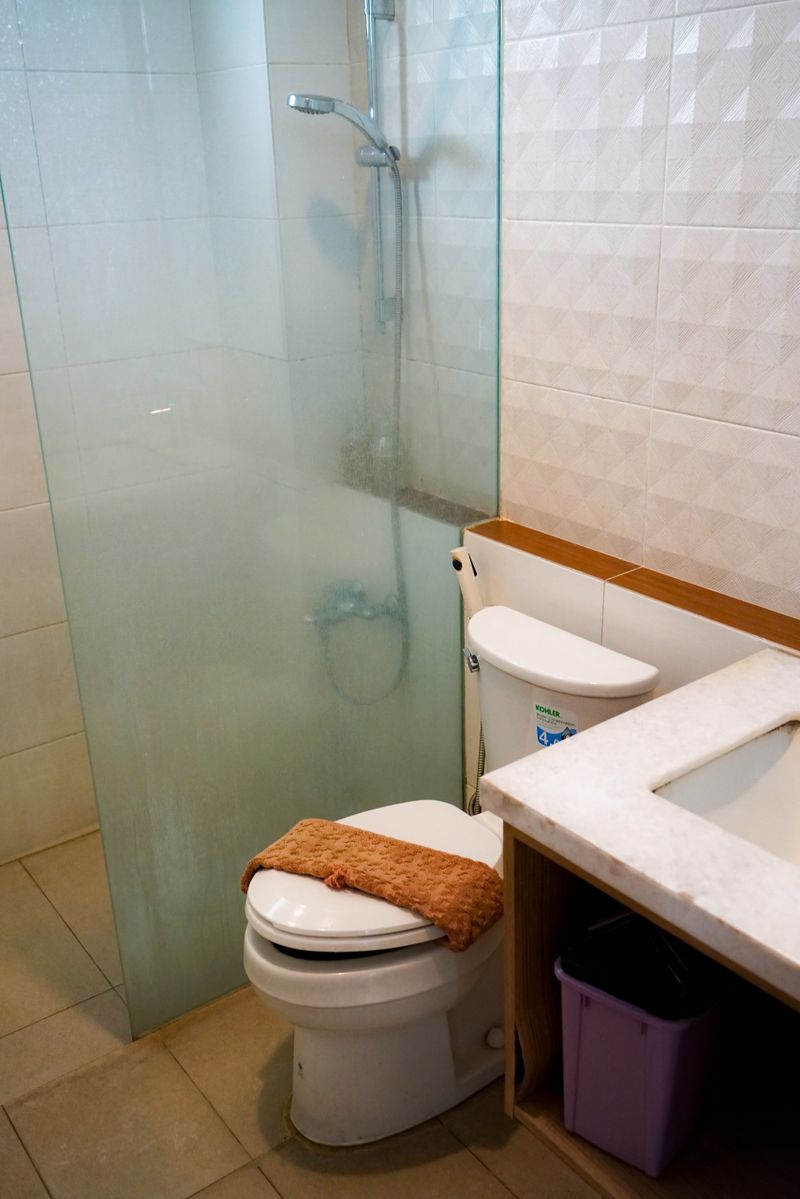
When a toilet gurgles as the shower drains, the toilet is reacting to air or pressure movement in a connected drain-and-vent path. The sound alone cannot tell you whether the problem is a partial shared drain clog, a venting defect, or a restriction farther toward the sewer or septic system.
Start with four observations: what triggers the sound, where the sound comes from, what the bowl water does, and whether any fixture drains slowly or backs up. If water or sewage rises in the toilet, shower, tub, or floor drain, stop using connected fixtures instead of running more water to test it.
First, confirm that the gurgle comes from the bowl
Remove the tank lid only if it lifts off normally and you can set it down safely. Then listen without touching the working parts.
- Bubbles, gulping, or water-level movement in the bowl point to pressure acting through the toilet’s built-in trap. Continue with the cross-fixture checks below.
- Hissing or refilling inside the tank points toward the fill valve, flapper, or a slow tank leak. Use the running-toilet diagnostic instead.
- Noise at the shower drain rather than the toilet may begin with hair or debris near that fixture, but a second fixture reacting still makes the shared piping important.
Do not flush repeatedly to “see if it clears.” One careful observation is more useful than adding enough water to turn a partial restriction into a backup.
Match the trigger and observation to the next action
| Trigger and observation | What it suggests | Next action |
|---|---|---|
| One nearby shower triggers the toilet; other rooms drain normally | Shared bathroom branch restriction or venting problem | Record bowl movement and shower speed; arrange branch-and-vent diagnosis if it repeats |
| Shower and washing machine both trigger the same toilet | A farther-downstream shared drain or vent path | Stop testing and map all fixtures that react |
| Toilet gurgles only after its own flush | Toilet trapway, fixture connection, or nearby branch issue | Treat it as a toilet/local-drain symptom unless other fixtures also react |
| Several drains are slow, or the lowest fixture receives water | Building drain or main sewer obstruction is more concerning | Stop using water and call for prompt service |
| Bowl stays still while the tank refills or hisses | Fill-valve, flapper, or tank issue | Diagnose the toilet’s supply-side parts |
| Septic property has gurgling plus slow drains, odor, an alarm, or wet ground near the drainfield | Septic malfunction or hydraulic overload is possible | Reduce water use and call a qualified local septic professional |
This table chooses a diagnostic direction, not a pipe. The vent-stack-versus-drain-clog guide explains the broader fixture patterns without assuming every gurgle is a blocked roof vent.
Read what the toilet bowl does
The bowl is a visible trap seal, so its movement provides better evidence than the word “gurgle.”
The water level drops after a gulp
A falling level can reflect negative pressure or siphonage as discharge moves through connected piping. Restricted vent airflow is one possibility, but a partially filled drain can also change the available air path.
The 2024 International Plumbing Code requires a venting system that protects trap seals from excessive pressure differential. That principle explains why bowl movement matters, but the code edition and permitted vent arrangement adopted where you live may differ.
Bubbles rise and the water level climbs
Positive bubbling or a rising bowl suggests air or wastewater is being pushed back toward the fixture. A restriction downstream becomes more concerning when the shower also slows, several fixtures react, or water appears at the lowest drain.
Stop the shower immediately if the bowl continues rising. Keep people and pets away from wastewater and do not open an indoor cleanout or remove the toilet while the line may be holding backed-up water.
The water moves, but every drain remains fast
A venting defect remains possible, especially after plumbing or roofing work, during a hard freeze, or when a trap repeatedly loses water. Note the conditions from the ground. Do not climb onto the roof or push a hose, snake, or pressure nozzle into a vent terminal.
One bathroom, one branch, or the whole house?
The affected area helps a plumber choose an access point and avoid clearing the wrong pipe.
- Map the bathroom group. Note whether the shower, toilet, and sink share a wall or floor and whether only that group reacts.
- Check other fixtures without creating a stress test. Record existing slowness, odors, or recent gurgling elsewhere. Do not run every faucet at once.
- Identify the lowest fixture. A basement shower, floor drain, or first-floor tub may show a downstream backup before an upper fixture does.
- Record recent changes. Include drain cleaning, toilet replacement, remodeling, roof work, freezing weather, heavy rain, or a sudden increase in household water use.
- Note any chemicals already used. Tell the plumber before work begins. Never mix drain products or add another chemical to test the line.
If multiple fixtures slow or wastewater reaches a low drain, use the main sewer clog warning signs to move from observation to emergency service without repeating high-volume tests.
Municipal sewer and septic clues need different follow-up
For a property on a municipal sewer, determine the local ownership boundary and whether the utility has reported a public-main problem. Indian River County’s homeowner guidance, for example, separates private and utility responsibility at the property line; that boundary is local, not universal. A plumber or utility can decide which side needs investigation.
For a septic property, the U.S. Environmental Protection Agency lists gurgling plumbing, slow drains, indoor backup, sewage odor, and wet or unusually lush drainfield areas among potential malfunction signs. A recent cluster of laundry loads, guests, or heavy water use may add hydraulic load, but it does not prove the tank merely needs pumping. Avoid the drainfield, reduce water use, and contact a septic professional who can assess the tank, components, and soil treatment area.
In either system, do not open a cleanout during an active backup just to diagnose ownership. You can identify likely access points from a safe distance with the sewer cleanout location guide and let the responding professional decide how to open them.
What not to do
- Do not keep showering, flushing, or running the washer when water rises or a low fixture backs up.
- Do not assume a roof vent is clogged and climb up to clear it.
- Do not mix drain cleaners, add chemicals after another product, or hide chemical use from the plumber.
- Do not remove a toilet or indoor cleanout cap while a downstream line may be full.
- Do not choose snaking or hydro jetting from the symptom alone. Pipe condition, obstruction type, access, and inspection evidence should control the method; compare them in the drain snake versus hydro jetting guide.
Plumber handoff checklist
Give the service provider a concise record before authorizing work:
- Property address and whether service is municipal sewer or septic
- Exact trigger: shower running, tub release, washer pump-out, another toilet flush, or several triggers
- Which toilet reacts and whether the sound is in the bowl or tank
- Whether the bowl rises, falls, bubbles, or loses its normal water level
- Which fixtures are slow and where the lowest affected drain is located
- Any wastewater, odor, septic alarm, wet drainfield area, or utility notice
- When the symptom began and any recent remodel, repair, cleaning, freeze, storm, or occupancy change
- Products or tools already used
- Known cleanout locations, plumbing plans, and a short video of the symptom if it was captured without repeating the test
Ask the plumber to identify the fixture, branch, building drain, sewer, or vent segment supported by the evidence, the access point and tests used, and the smallest corrective scope those findings justify. If camera work is recommended, request continuous footage, location references, limitations, and a written interpretation using the sewer camera service checklist.
The practical next step
If the noise comes from the tank and the bowl never moves, troubleshoot the toilet’s refill components. If the bowl reacts whenever a nearby shower drains, schedule a drain-and-vent diagnosis and share the fixture map. If any fixture backs up, stop adding water and request urgent help.
Give the plumber enough trigger-and-observation evidence to test the right section first—and keep an early warning from becoming a wastewater cleanup.
Sources and standards checked

Flow Control HQ Editorial Team
Independent trade-focused editorial team